

If you have ever written a song, designed a logo, or published an article, copyright law was working in your favor, whether you knew it or not.
In the U.S., creative works receive legal protection automatically. But understanding how that protection works is what lets creators actually use it.
Copyright Protection Begins the Moment You Create Something.
Under the Copyright Act of 1976, protection attaches the instant an original work is fixed in a tangible medium. That means the moment you save a document, record a track, or photograph a scene, the law recognizes your rights.
No registration. No copyright symbol. No mailing yourself an envelope.
That said, the scope of what is protected matters. Copyright covers the expression of an idea, not the idea itself. Two photographers can shoot the same landscape. Neither can copy the other’s specific image.
Copyright Gives Creators a Bundle of Exclusive Rights.
Ownership is not just a label. Under 17 U.S.C. § 106, copyright holders have six exclusive rights over their work:
- Reproduction: the right to make copies
- Distribution: the right to sell or share the work
- Adaptation: the right to create derivative works
- Public performance: the right to perform the work publicly
- Public display: the right to show the work publicly
- Digital audio transmission: specifically for sound recordings
Violating any one of these without authorization is infringement, regardless of whether the infringer profited from it.
According to U.S. federal courts, copyright infringement cases have increased by over 33% in the past decade, reflecting how broadly digital distribution has expanded both access and misuse.
Registration Is Not Required, But It Changes Everything in Court.
Here is the practical reality: unregistered copyright exists, but it is harder to enforce. To file an infringement lawsuit in a U.S. federal court, registration is required.
More importantly, timely registration, before infringement occurs or within three months of publication, unlocks two powerful remedies:
- Statutory damages: up to $30,000 per work infringed, and up to $150,000 for willful infringement
- Attorney’s fees: recoverable from the infringing party
Without timely registration, you are limited to proving actual damages, which is often difficult and expensive.
The U.S. Copyright Office processes roughly 500,000 registrations annually, and legal professionals consistently recommend registering commercially valuable works early.
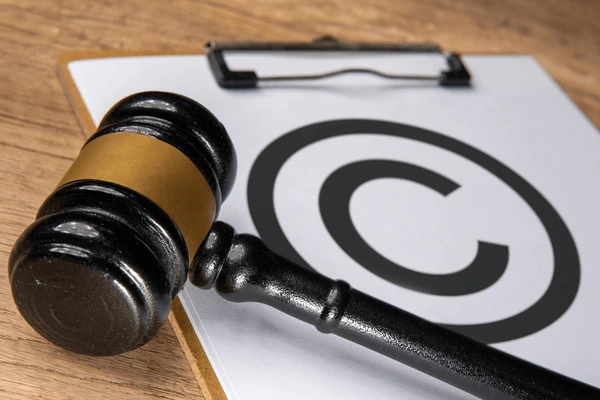
The Copyright Symbol Still Matters, Even If It Is Not Required.
Before 1989, using the © symbol was mandatory to maintain copyright protection in the U.S. That changed when the country joined the Berne Convention. Today, notice is optional.
But optional does not mean useless. Displaying © removes an infringer’s ability to claim they did not know the work was protected, which can significantly affect damages in litigation.
Infringement Has Real Legal Consequences.
Copyright infringement is not just a civil matter. For willful infringement, especially at scale, it can become criminal. Under U.S. law, criminal copyright infringement carries penalties of up to 5 years imprisonment for a first offense, and up to 10 years for repeat offenders.
Civil penalties, as noted above, can reach $150,000 per work. These are not abstract numbers.
In 2023 alone, U.S. Customs and Border Protection seized counterfeit and pirated goods with an estimated retail value of over $2.8 billion, a figure that reflects how seriously federal agencies treat IP enforcement.
Fair Use Limits What Copyright Can Control.
Copyright protection is broad, but not absolute. The doctrine of fair use allows limited use of copyrighted material without permission, under specific conditions.
Courts evaluate four factors: the purpose of the use, the nature of the original work, how much was used, and the effect on the original’s market.
Commentary, criticism, parody, and education are common fair use contexts. But there is no guaranteed formula; every case turns on its own facts.
Copyright law gives U.S. creators meaningful, automatic protection. But that protection only works if you know what you have, register what matters, and act when your rights are violated.